Blog: When Maternal Rage Becomes Power
5 ways to turn your anger into advocacy | 4 min read Published in Postpartum Support International
I remember the moment I became a maternal health advocate.
When I was eight weeks postpartum, I joined a support group for new moms. During our first meeting, we shared our birth stories:
One mom was trying to make sense of an unplanned C-section.
Another worried about burning through her PTO for a longer-than-expected NICU stay.
Others felt like they ‘failed’ because they couldn’t breastfeed.
I was fortunate to have an uncomplicated birth and extended parental leave. But listening to these stories, I realized how different (and hard) the transition to motherhood was. Too many were grieving the version of motherhood they thought they’d get.
That’s when I realized our country wasn’t built for new moms. I was confused and wanted to understand why.
The book Pay Up by Reshma Saujani gave me the answer with this line: “Motherhood feels impossible because our workplaces, policies, and culture were never designed to support caregivers.”
It confirmed that moms aren’t failing – the system is. The book also explained how we got here and what it’ll take to build a better future.
That kicked off my advocacy journey.
Maternal rage is a message
At this year’s Postpartum Support International Conference, I attended a session on maternal rage led by Nicole McNelis, LPC, PMH-C, and Kristen Lipari, PhD.
Nicole described maternal rage as intense anger rooted in powerlessness, injustice, and chronic stress. It can look like yelling, overstimulation, resentment, or feeling totally overwhelmed – often followed by guilt and shame.
Then came the biggest takeaway for me:
Externalizing maternal rage is how change begins.
Rage tells us a boundary’s been crossed. It signals something isn’t working.
That was a huge ‘aha’ moment for me.
My therapist has taught me not to suppress my anger, but to get curious about it. My biggest ‘pressure cooker’ moments come when violated expectations (like carrying an unfair share of the mental load) collide with unmet basic needs like sleep or food.
Nicole’s message helped me connect two parts of life I’ve never connected before. My maternal rage and my advocacy both came from the same place: a deep intolerance for injustice.
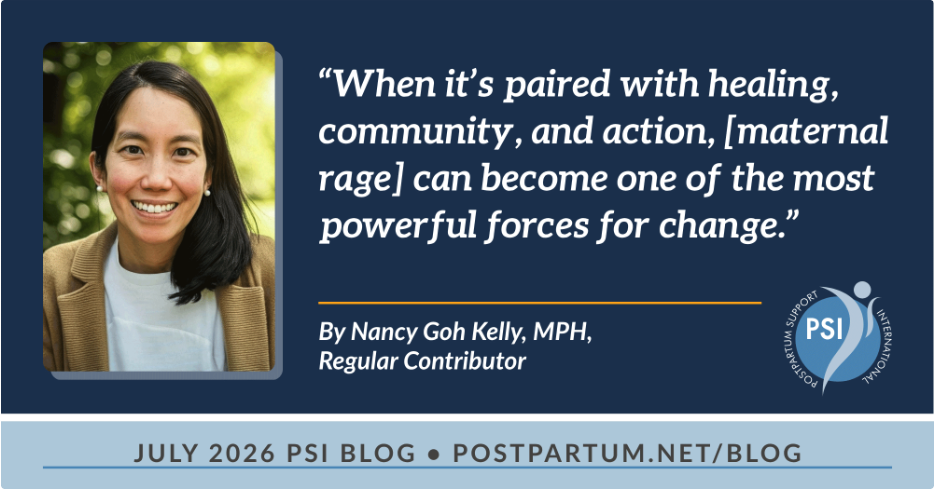
That’s when I realized maternal rage isn’t a weakness. When it’s paired with healing, community, and action, it can become one of the most powerful forces for change.
5 ways to turn maternal rage into meaningful change
“There’s nothing more powerful than a pissed-off mom.” Reshma Saujani
Anger carries a ton of energy. If you’re done with the status quo, here are five ways to turn that into action:
1. Learn how we got here
Read Pay Up and watch the new documentary No Country for Mothers (only available in community). They both explain why today’s gaps didn’t happen by accident – and what it’ll take to build something better. Understanding that history helped me shift from self-blame to systems thinking.
2. Find your people
Advocacy isn’t meant to be done alone.
Finding people who share your frustration (and your hope) changes everything. They remind you you’re not overreacting and push you to keep going.
Organizations like Postpartum Support International, Chamber of Mothers, Moms First, and Maternal Mental Health Leadership Alliance gave me that built-in support network, practical tools, and courage to speak up. The fastest way to turn helplessness into hope is in community.
3. Tell your story
Stories paired with data are one of the most powerful forms of advocacy.
I remember how nervous I was before my first post on social media about motherhood. Ironically, the posts that performed best were the honest ones.
Writing has become part of my healing. You don’t need a large platform. Your story can help another mom feel seen or help a decision-maker appreciate what’s at stake.
4. Pick one issue that breaks your heart
You don’t have to fix the entire maternal mental health system.
Pick one issue you can’t stop thinking about.
Paid leave. Pregnancy loss. Maternal mental health. Birth equity.
Whatever it is, let yourself get really curious about it. Learn from the people most affected by it. Read the research. Find organizations already doing the work, then ask how you can help.
Eventually, your curiosity turns into purpose when you keep showing up.
5. Use your voice
Advocacy doesn’t require running for office.
Legislators consider thousands of bills every year. They may forget a statistic, but they won’t forget a constituent sharing what it felt like to return to work two weeks after a traumatic birth – or lose a pregnancy because care wasn’t accessible.
Your story matters because you lived it.
Not sure where to start? Here are some ideas:
Join a community: Sign up for a Postpartum Support International Climb event or Chamber of Mothers local chapter.
Advocate at work: If your employer doesn’t offer paid leave, use Moms First’s advocacy toolkit to start the conversation.
Call your elected officials: Pick one issue from the Chamber of Mothers or MMHLA policy agendas, then use the 5 Calls app to contact your local rep.
Join an advocacy day: Join Maternal Mental Health Leadership Alliance’s advocacy day.
From Rage to Purpose
“Mothers are mothering in a very broken system. Maternal rage isn’t a meltdown, it’s a message.” Nicole McNelis
I can’t stop thinking about this quote since the conference.
For a while, I thought my anger was just telling me to slow down, ask for help, or set better boundaries.
Sometimes it was.
Other times, it was telling me something else: it shouldn’t be this hard.
It reminded me that new moms deserve better.
Advocacy is a long game. I keep doing this work because I want my daughter to grow up believing that speaking up when something feels unfair is normal – and that finding your voice is how change begins.
So if your maternal rage is trying to tell you something, don’t ignore it. Get curious, because it may reveal what you care about most.
Your voice has more power than you think.
If you’re struggling, reach out. You’re not alone. Contact Postpartum Support International’s HelpLine at 1-800-944-4773.