Reflections from PSI 2025
Postpartum Support International doesn’t wait; we act | 8 min read
Introduction
Postpartum Support International doesn't wait.
We act.
We build bridges.
We fill gaps with compassion, expertise, and community.
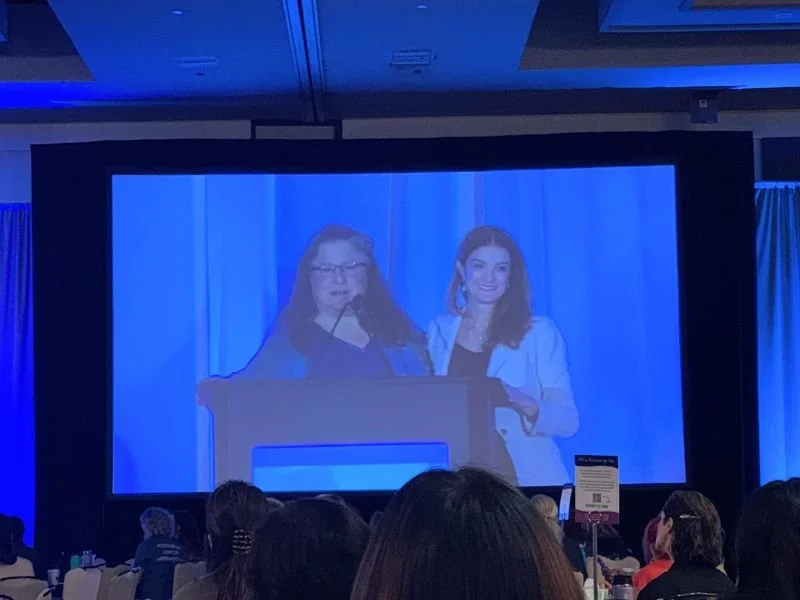
That was the call to action from PSI Board Director at this year’s conference in NOLA.
PSI is a global force–6,000+ members across all 50 U.S. states and 30+ countries, raising the bar for perinatal mental health through:
- Universal screening
- Extensive workforce training
- A safety net of free support resources
The conference rallied hundreds more professionals, survivors, and champions for change in the field.
And it gave us more fire to keep going.
In this series, I share 7 reflections on what stood out most, including:
🌟 What mood disorders actually looks like
🌟 Trainings that level up care and support (not just for providers)
🌟 PSI’s free support new moms can access today
🌟 Why research alone won’t fix the system
🌟 The most exciting thing I learned
And more on health equity, community, and the moment that made it all worth it. Every mom deserves to feel whole and empowered.
Why lived experience matters
“I had no idea I had postpartum depression until my son was 10 years old.”
“That c-section was my first failure as a mom.”
“Every time we started a feed, I felt a wave of doom."
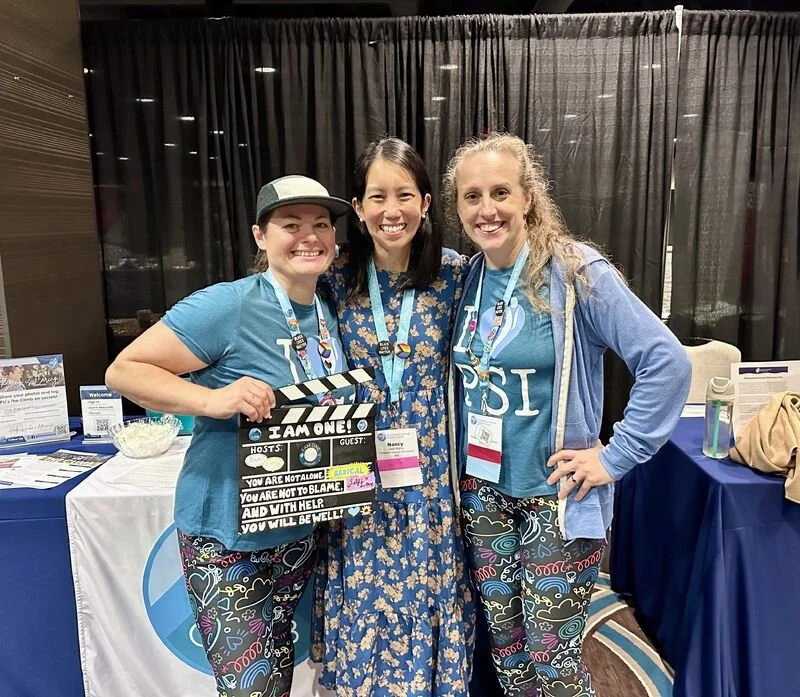
These are real stories from I Am One, Postpartum Support International’s podcast.
1 in 5 moms experience mood disorders during pregnancy or after birth. It’s not just ‘baby blues’ or PPD. It’s anxiety, OCD, bipolar disorder, psychosis–and it looks different for every mom. Many OBs miss it due to inconsistent screening and underdiagnosis.
That’s why these conversations matter.
I Am One brings these symptoms to life. It helps moms think, ‘Wait…that sounds like me,” and it gives them courage to seek help. It's not your typical mental health podcast either—it's group therapy with a dose of entertainment.
The PSI conference reminded us that sharing stories is a strategy, not a weakness. And that vulnerability is a force for action and better care.
Here are my favorite episodes to start:
🌟 Stacey Figg: Inpatient survivor turned doula (PPA)
🌟 Taleah Bryant: Doula and advocate living her truth (PPA, Pregnancy Loss)
🌟 Lisette Lopez-Rose: Latina mom reclaiming her rage (PPD, PPA)
🌟 Krithi Lodha: 1 in 1,000 turning pain into purpose (Psychosis)
Kriti Lodha said it best:
“Conversations and dialogue are the only way we ensure people get access to care.”
📣 Let this podcast be the conversation. It could help a mom name what she’s feeling and take proactive steps to care for herself. It could even save her life.
The more we know, the sooner we help moms feel whole again.
Get trained
“Providers want to screen and help, but don’t know how.”
When a new mom scores high on a depression questionnaire.
When she’s not acting herself.
When she’s clearly asking for help.
This excuse doesn’t cut it anymore.
Trainings and tools exist. And they’re not just for OBs.
If you reach new or pregnant moms, there’s something for you. Providers, loved ones, childcare centers, community leaders, baby brands, employers.
7 years ago, PSI launched the PMH-C certification to raise the bar on perinatal mental health care. At the PSI conference, I learned there are now 180+ trainings (from 1-hour webinars to full programs):
🌟 PSI’s 2-day PMH-C training:
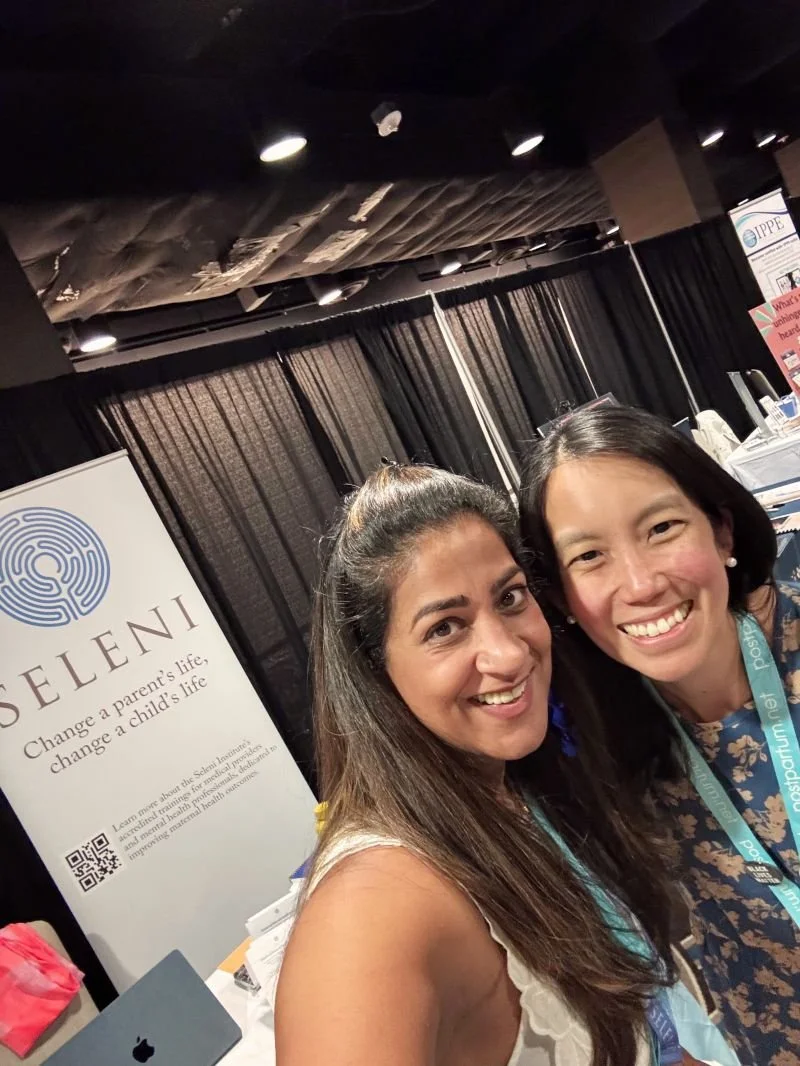
🌟 Seleni Institute’s accredited training courses
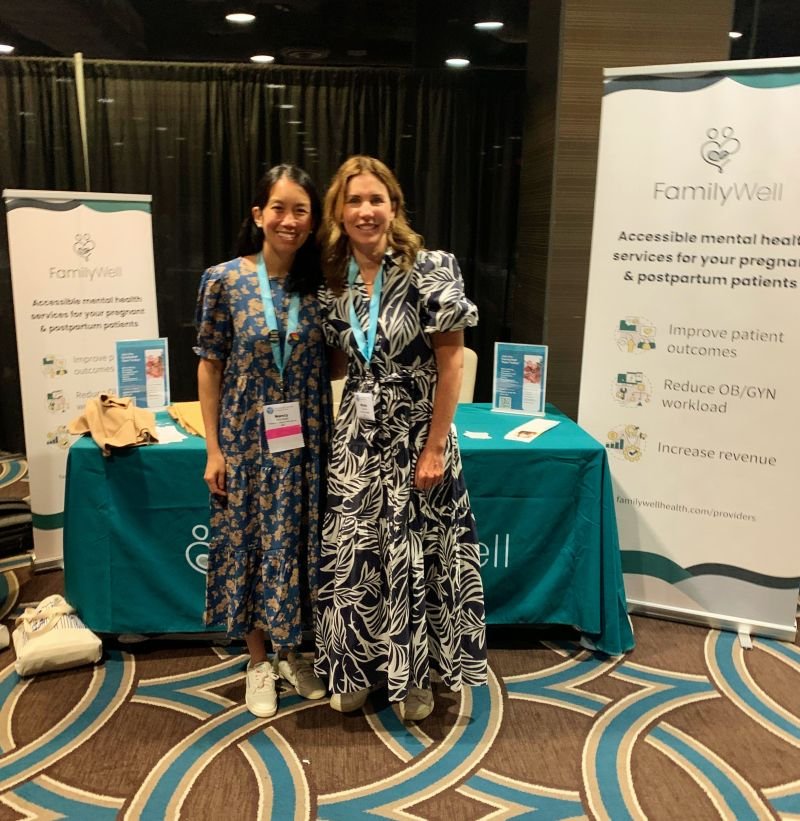
🌟 FamilyWell Health perinatal behavioral health coaching certification
🌟 Maternal Mental Health Leadership Alliance (MMHLA)'s Training Database of 180+ courses searchable by role, topic, length, and price
We can’t keep letting moms slip through the cracks.
Fully caring for moms means recognizing when she needs help, meeting her with empathy, then putting her on a path to care.
Let’s stop saying, “I didn’t know how to help.” Let’s get trained–and actually help.
A global safety net
“What’s unique about PSI is all the lived experience.”
PSI President Wendy Davis said it best at this year's conference. But it’s not just lived experience. It’s a safety net with global reach–active in all 50 U.S. states and 40+ countries. IA coordinated system backed by decades of collective expertise. Thousands of trained, multilingual staff and volunteers ready to meet moms where they are, exactly when they need it.
The best part is it's all FREE.
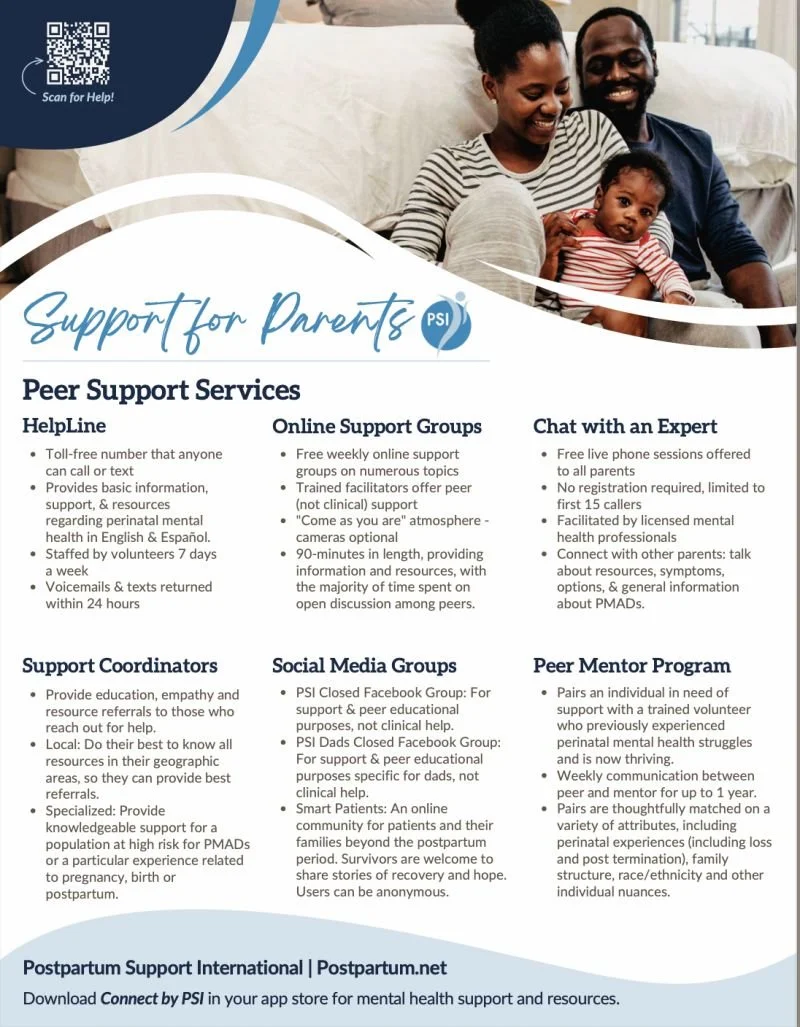
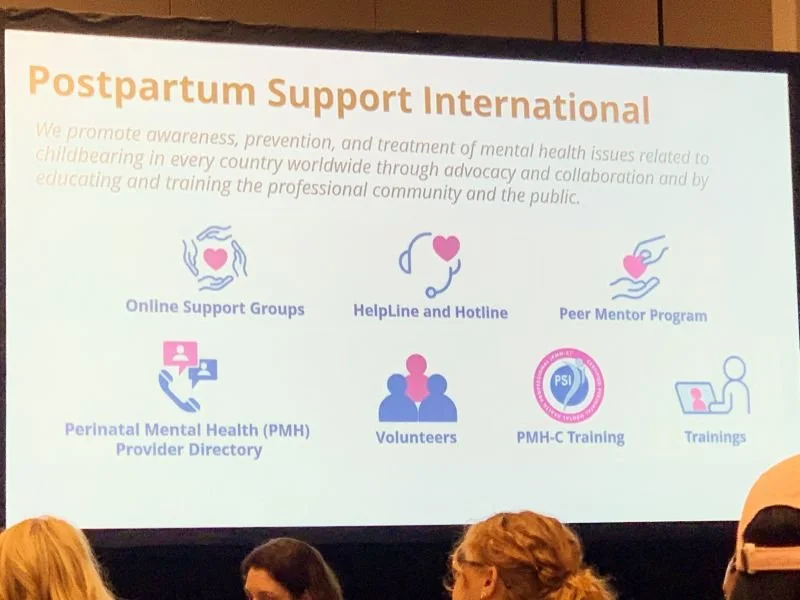
Here’s what PSI offers–from pregnancy through postpartum:
🌟 Helpline: Confidential call/text support in English and Spanish
🌟 Online Support Groups: 50+ weekly virtual groups led by trained facilitators
🌟 Support Coordinators: Local experts offering tailored referrals in all 50 states
🌟 Provider Directory: PMH-trained professionals searchable by zip code and insurance
🌟 Psychiatric Consult Line (for providers): Expert case consultation from perinatal psychiatrists.
And more…
It’s more than support. It’s infrastructure and a live model of quality wraparound care.
Lived experience isn’t just personal–it’s strategic. It earns trust and builds systems that actually work for moms.
Our system is stretched and maternal mental health isn’t optional. PSI is ready to go–let’s make it a standard part of care.
Advancing equity for all
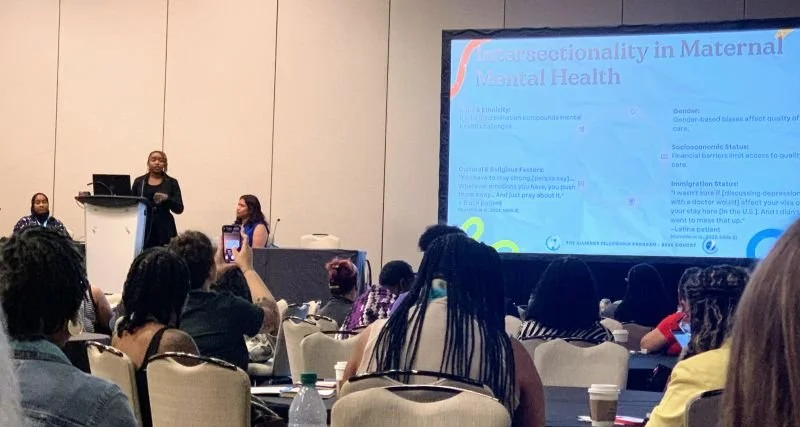
“I didn’t know if discussing depression with my doctor would affect my visa status.” - Latina patient
Perinatal mental health care was never built for all families. It misses the realities of most women of color, immigrants, queer parents, and non-birthing partners.
At the PSI conference, equity was the foundation for many conversations:
🌟 Ask better questions: Don’t assume. Ask about trauma, culture, family structure, and mental health history.
🌟 Design care that fits real life: Tailor support around lived experience, not Western norms.
🌟 Diversify the workforce: Representation matters. So does recognizing our own biases and showing up with humility.
🌟 Build with the community–not for them: Solutions land better when the people impacted are at the table.
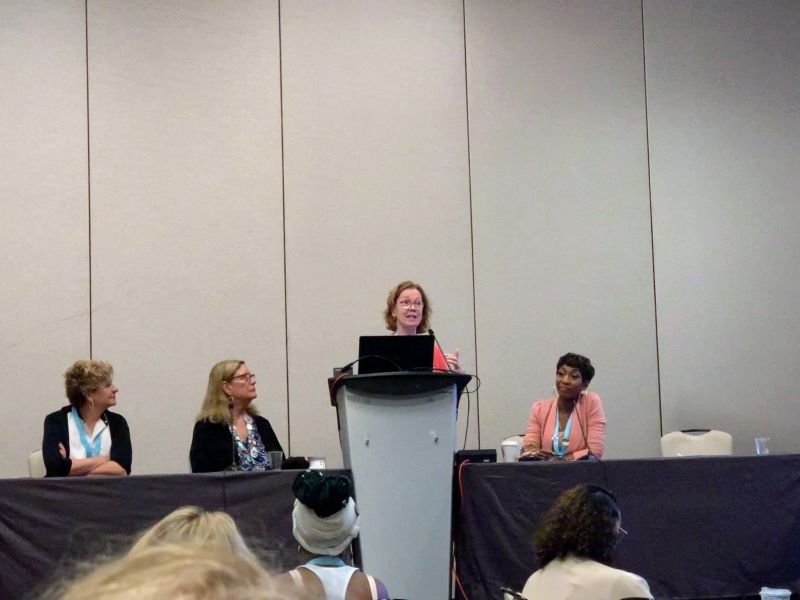
As keynote speaker Dr. Sheehan Fisher reminded us: “Inclusion is a journey. We must change our own attitudes, biases, and how we think.”
Here’s what you can do today:
📣 If you’re a BIPOC professional: Apply for the PSI Alliance Fellowship (deadline is July 31st): https://lnkd.in/gx2_i9sd
📣 If you’re a provider: Take anti-bias training and update your referral pathways to reflect your community.
📣 If you’re a researcher: Study the families who’ve been left out–not just the ones who are easy to reach.
If we want care that works for all families, we have to build it that way.
What system change looks like
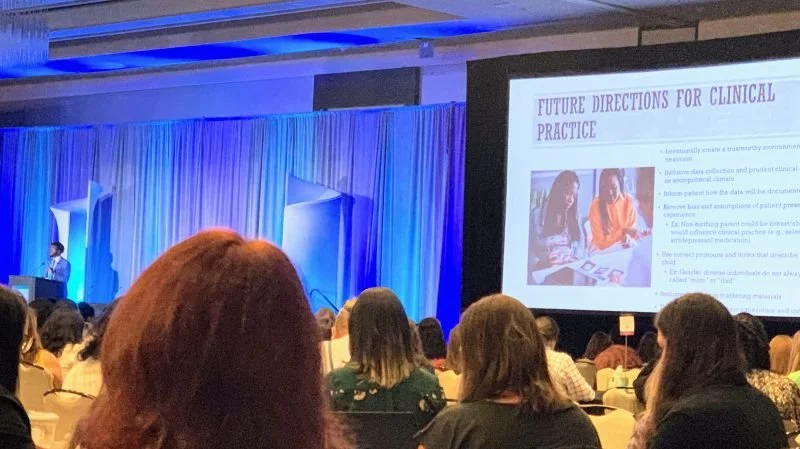
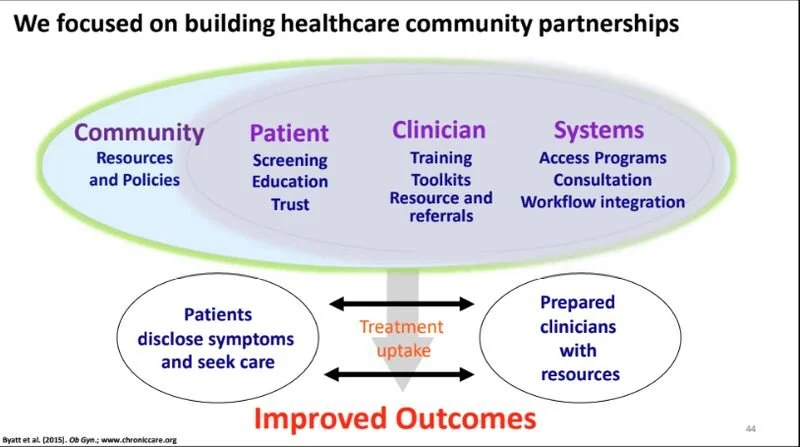
“It’s not just about research. It’s about systems change.”
Dr. Nancy Byatt spoke my love language in her keynote at the PSI Conference.
Too many new moms hit walls in a health system that's supposed to help:
- OBs don’t know how to help
- Referrals lead to frustration
- Services that aren’t realistic
At the conference we saw what real, scalable change looks like:
🌟 MCPAP for Moms: A statewide model in MA that equips OBs to treat, not just refer
🌟 CVS Health MinuteClinics: Access to PSI-trained therapists in 49 states, bringing care to where moms already go
🌟 National Maternal Mental Health Hotline: 1-833-TLC-MAMA offers free, 24/7 support in 60+ languages.
🌟 Pomelo Care: 24/7 virtual, comprehensive care for families.
🌟 PSI and Maternal Mental Health Leadership Alliance (MMHLA): Driving training, policy, and grassroots advocacy.
What do these wins have in common? Systems change isn’t done alone. It takes clinicians, researchers, community orgs, patients, and policymakers–working together.
What can be done now to shift the system forward:
📣 Providers + community orgs: Add the MMH Hotline to every patient-facing flyer.
📣 Funders and advocates: Use MMHLA’s state fact sheets to guide investments and action.
📣 Clinics (10 states eligible): Help build the future of integrated OB and mental health care by joining the Pathways study. Funding, tools, and coaching included.
📣 Everyone: Share PSI’s provider directory and 50+ free support groups for real help, when it’s needed.
Systems change takes time. But it's the only way every new mom gets the care she deserves.
The best thing I learned at the conference
I didn’t hear about PSI from my OB.
When I became a PSI Local Coordinator in 2022, I launched a mini campaign–letters, brochures, follow-ups–to get my OB and my child’s pediatrician to share PSI resources with new and pregnant moms.
Nothing changed.
PSI is a natural extension of OB care–it offers a helpline, local coordinators, 50+ support groups, and more. All. For. Free. So why isn’t it part of the standard of care?
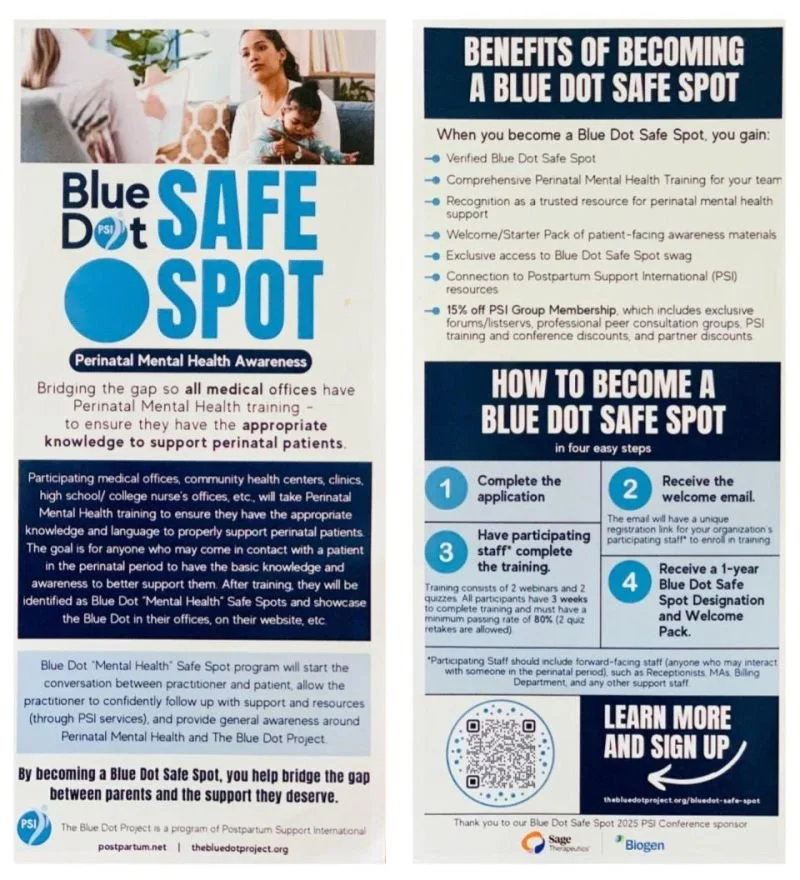
That’s why I’m jumping for joy about what PSI is about to launch—the Blue Dot Safe Spot program—giving medical staff the knowledge and language to help new moms.
Participants get:
🌟 2 training webinars on perinatal mental health
🌟 Recognition as a Blue Dot Safe Spot, a trusted resource for support
🌟 Patient-facing materials
🌟 And more…
It’s simple. But it builds trust and empathy–and could change the entire feel of a practice. It shows a mom her OB team knows what to do, then connects her to real help when she need it. Most importantly, it puts her on a path to feeling herself again and builds long-term resilience.
Let’s get this in every clinic and community:
📣 Sign up here for updates
📣 Sponsor or donate a Safe Spot
Moms are falling through the cracks. PSI’s Safe Spot makes it easy for clinics to become the safety net.
The moment that made it all worth it
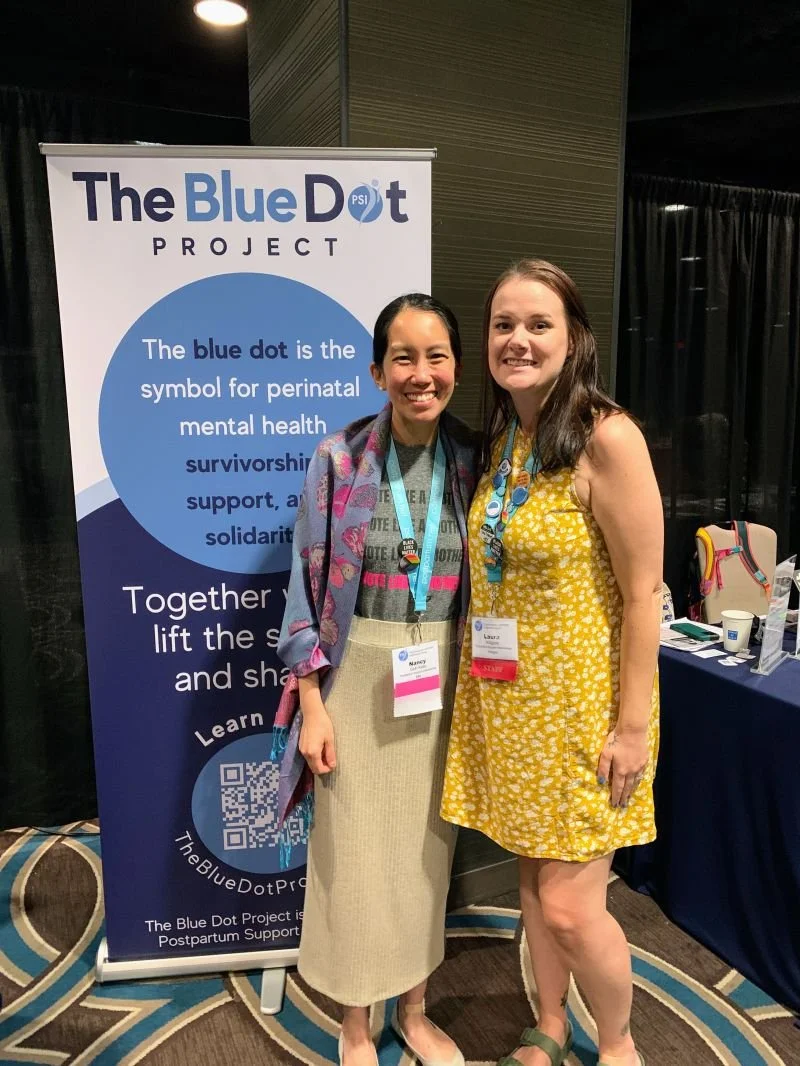
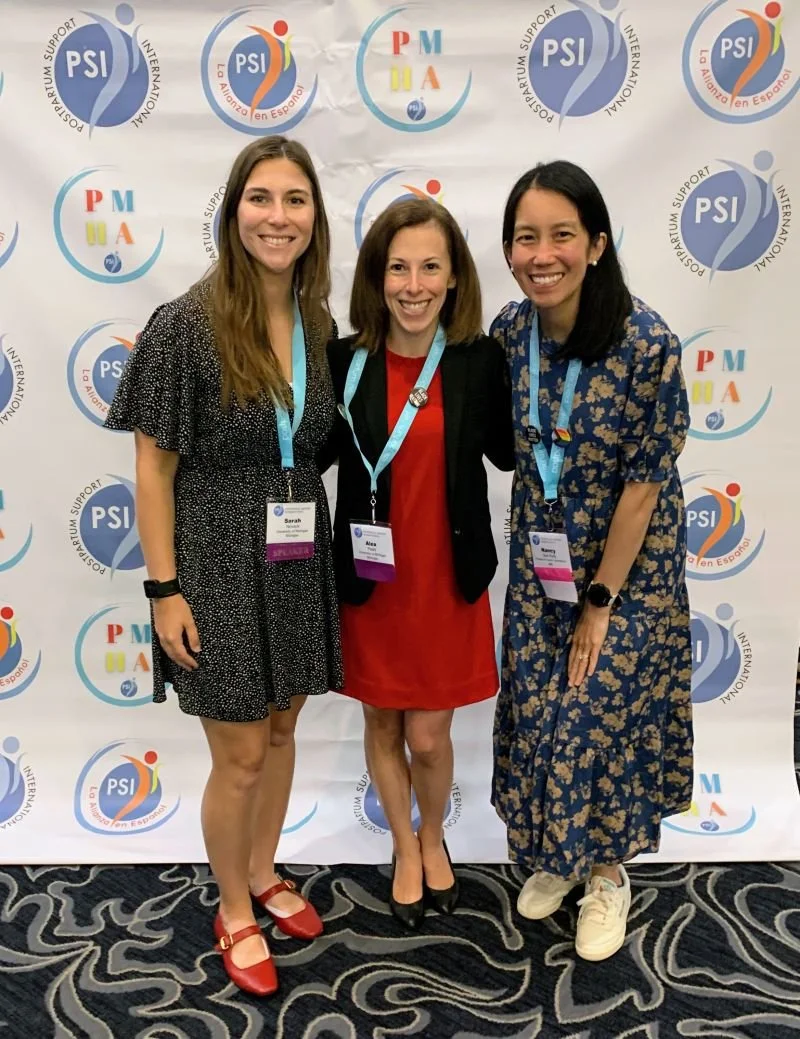
This was my full circle moment at the PSI Conference: I met Dr. Alex Peahl, co-architect of American College of Obstetricians and Gynecologists (ACOG)'s new prenatal care guidance (and my instant maternal health s-hero when it dropped).
Her work with Sarah Novack at Michigan Medicine is proof that change is already happening, and it's possible. ACOG’s guidance radically shifts maternity care from reacting to crisis to preventing it–with more personalized, flexible care.
It also backs what PSI has championed for 35+ years: Caring for new moms means caring for the whole mom, including her mental health.
PSI is already built for this:
- Tools + training to level up OB care (screening, psychiatric consult line, PMH-certification)
- Trusted handoffs to an army of support (helpline, local coordinators, support groups, provider directory, and more).
And PSI can help OBs scale ACOG's vision:
🌟 Catch red flags early before they become crises
🌟 Close the loop with free, community-based support
🌟 Extend care beyond the 15-minute visit
🌟 Deliver whole person, compassionate care every new mom deserves
Read more in my PSI blog here.
Meeting Dr. Peahl and Sarah gave me even more fire to keep pushing for care that actually works.
Whole-person care takes a whole system, working together. Let’s make mental health a standard part of prenatal care.
Bringing it all together
This work is hard.
Especially now. When maternal health progress is being rolled back. When conversations are leaving out the people who need care most.
But the PSI Conference reminded me: We’re not doing this work alone.
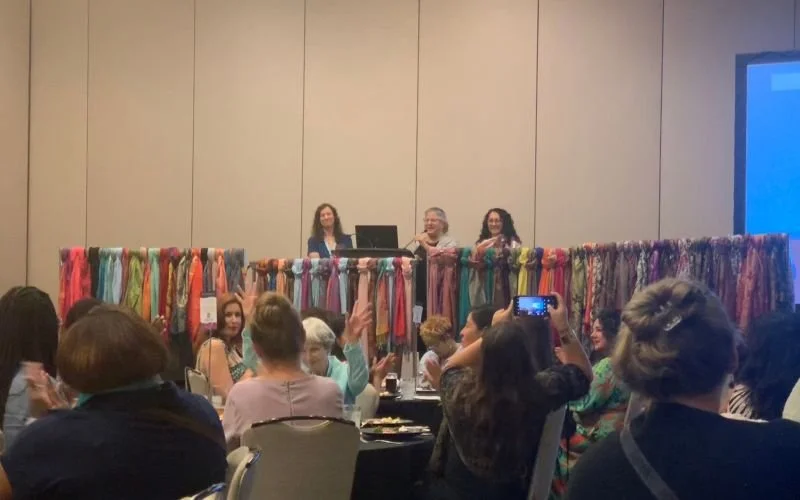
It was joy, grief, and grit all in one space:
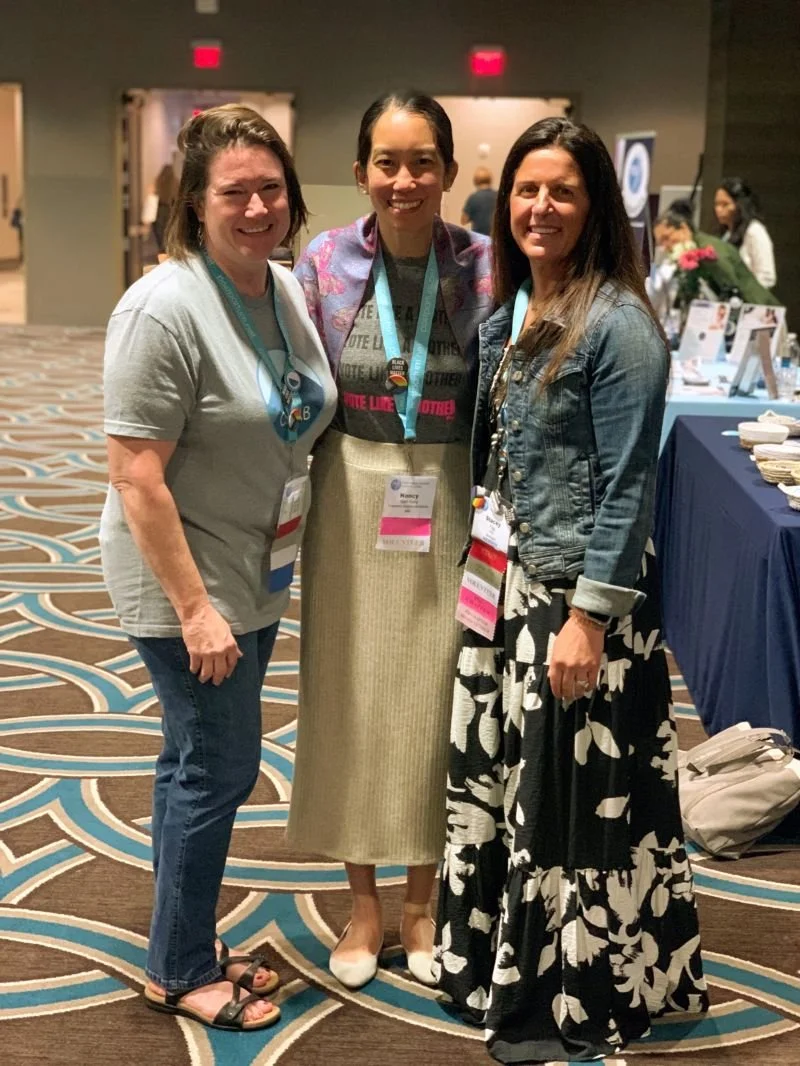
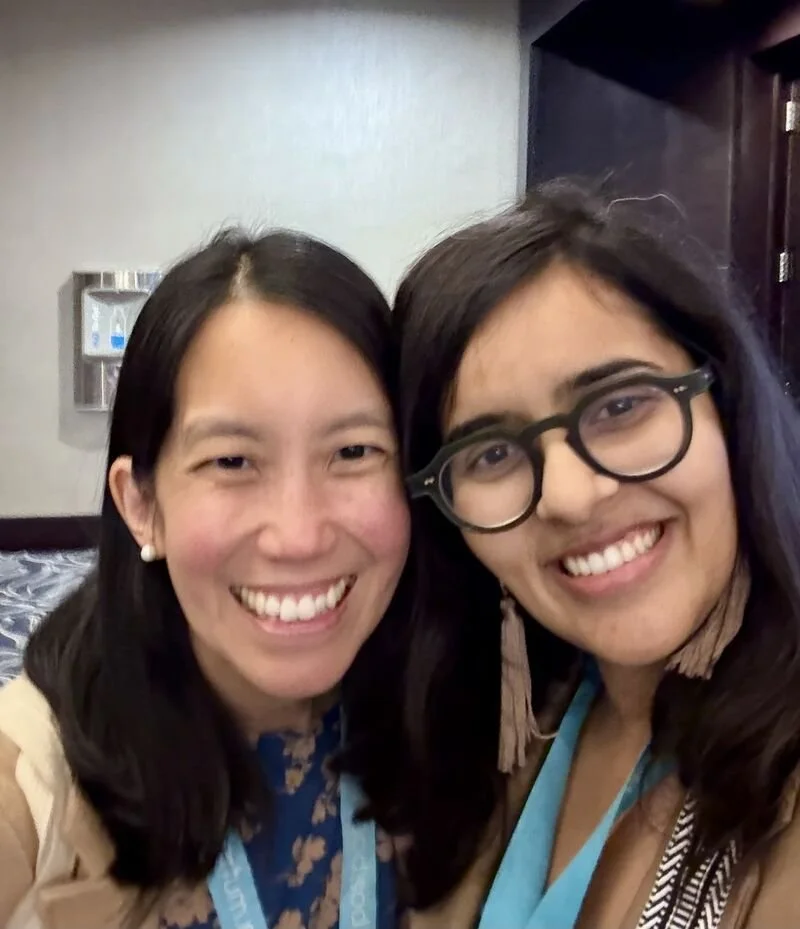
🌟 Bonding with friends, old and new, from PSI and Chamber of Mothers–kindred spirits joined by a shared purpose to build better for the next mom.
🌟 Meeting advocates, survivors, and providers using vulnerability and voice to drive real change.
🌟 Honoring how far we’ve come, thanks to PSI legends and national experts.
As PSI President Wendy Davis said:
“We’re not going away. We are not stopping diversity, equity, inclusion, and access.”
The research is happening. Advocacy is happening.
The hotline is alive. You’re alive.
We’re here. And we’re going to save more lives.”
PSI is a force, and even stronger when more join us:
📣 Join a PSI climb in your community
📣 Share PSI’s helpline with every new mom you know: 1-800-944-4773
📣 Donate to PSI to expand our support and professional education.
If you’re trying to change the care system, come find your people.
This system may be broken. But we’re still showing up, and building something stronger. 💙