Blog: When Fear Changes How New Moms Feel – and Seek Care
What the ICE surge taught us about maternal mental health and our care system | 4 min read Published in Postpartum Support International
Trigger warning: baby loss, stillbirth
In January, a video circulated on social media.
Federal enforcement agents detained a man inside a library where my family went just days before.
That month, more than 3,000 immigration enforcement agents descended in Minnesota, creating fear and panic across immigrant communities and communities of color.
As a second-generation Chinese American who previously experienced postpartum anxiety, I recognized the feeling instantly: elevated heart rate, tightness in my chest, trouble focusing, and bracing for the worst.
But this time, the threat wasn’t internal. It was all around me, and others in my community were feeling it too.
For many pregnant patients and new moms, the impact was far more severe.
When patients stop feeling safe, maternity care breaks down
“A pregnant patient in active labor refused an ambulance because she feared ICE agents. We saw fear repeatedly outweigh medical urgency.”
“In the beginning, only a fraction of patients showed up. Once we offered virtual visits, nearly everyone wanted care. They just didn’t feel safe.”
I spoke with Minnesota-based healthcare leaders serving moms–at a federally qualified health center, a safety-net mobile clinic, an equity-centered clinic, and an outpatient mental health clinic.
New and pregnant moms delayed care, skipped prenatal appointments and ultrasounds, or avoided clinics altogether out of fear of being targeted or detained.
Providers reported sharp increases in panic, hypervigilance, sleep disturbances, and avoidance behaviors – including fear of attending medical appointments in person. One clinic reported a more than five-fold increase in postpartum anxiety and depression.
The stories were heartbreaking:
A mom stepped onto a mobile clinic van smiling, “I haven’t been outside since my baby was born.”
A pregnant patient’s partner had been detained. After the birth, the mother called the father. He apologized to his baby over and over for missing the birth.
A pregnant Venezuelan immigrant skipped 2 months of prenatal visits. She delivered a healthy baby, but the fear and re-traumatization from violence in her home country made her too afraid to leave home postpartum.
A high-risk patient missed a critical ultrasound due to ICE activity near her apartment. She planned to go the next day, but went into labor that evening. She later lost her baby.
Another patient delayed prenatal care until 34 weeks, after her partner was deported. She arrived with severe preeclampsia and fetal growth restriction. Her baby was stillborn two days later.
Basic needs became healthcare barriers, too.
Patients skipped meals because they were afraid to leave home for groceries. Others lost phone service and became hard to reach.
How clinics stepped up
“It became clear that ignoring what was happening was not going to be an option for anyone in healthcare.”
One provider described the response as ‘organic and matriarchal’, with clinics, doulas, therapists, and midwives mobilizing to help vulnerable families.
Proactive outreach
Clinics built systems to identify pregnant patients at highest risk of falling through the cracks. One provider kept a spreadsheet tracking missed appointments, ultrasounds, and care gaps because she was “damned not to lose another baby to preventable care disruptions.”
Teams called patients who missed appointments, checked in on safety concerns, and reconnected families to care before crises got worse.
Flexible care delivery
Care models were redesigned almost overnight. Clinics expanded telehealth, phone calls, mobile visits, and medication delivery–including weekends. “All-in-one” prenatal appointments combined ultrasounds, provider visits, nurse intake, and home blood pressure monitoring education into a single visit.
A new 24/7 multilingual hotline connected families in crisis to prenatal and postpartum care across hundreds of Minnesota’s providers.
Mental health providers adapted too. Therapy sessions shifted toward grounding and stabilization because patients were living in daily fear.
Bringing care to patients
Two clinics rapidly launched new programs for patients too afraid to access clinics or hospitals – including prenatal mobile home visits and equity-focused home- and community-based care.
Another clinic expanded home visits for prenatal care and postpartum support, blood tests, and medication drop-offs when clinics no longer felt safe.
Meeting needs beyond healthcare
Providers stretched far beyond traditional healthcare roles. Clinics coordinated rides with volunteers to ultrasounds, hospital deliveries, and urgent care. Providers distributed groceries, diapers, and baby clothes and connected families to legal aid and mutual aid groups.
In just a couple of months:
More than 200 patients were connected to patient portals so they could access prescriptions, telehealth visits, and care teams.
Referrals for mobile visits surged from 30 a month to 500.
One clinic secured $25,000 in private donations to cover rent and utility payments and arranged thousands of food deliveries.
These clinics rapidly built new systems of care in real time, helping new moms stay connected during an incredibly destabilizing period.
But they also exposed something deeper.
The problem isn’t just crisis response
When a system is forced to stretch, it reveals what’s possible – and how maternity care should be delivered. That’s what happened in Minnesota during the surge.
Proactive outreach. Flexible visits. Mental health and social support. Care built on dignity.
Our maternity care system wasn’t built for underserved families. It assumes patients have transportation, childcare, flexibility, and safe access to care.
Add fear, and those gaps get bigger fast.
The clinics best positioned to respond were already rooted in trusted, community-based care. FQHCs, mobile clinics, doulas, midwives, and equity-focused providers became lifelines.
And yet, these are often the models that remain most underfunded or hardest to access. We can’t continue relying on providers–an already strained workforce–to carry this burden alone every time a crisis hits.
Even now, months after the peak of enforcement activity, fear hasn’t fully disappeared.
Patients still avoid hospitals and clinics because they no longer feel safe there. Providers continue to see delayed care, missed preventive visits, and increased reports of perinatal mental health disorders.
What needs to change now
“Women often get missed until they are suicidal. That only gets worse when patients are too afraid to seek care.”
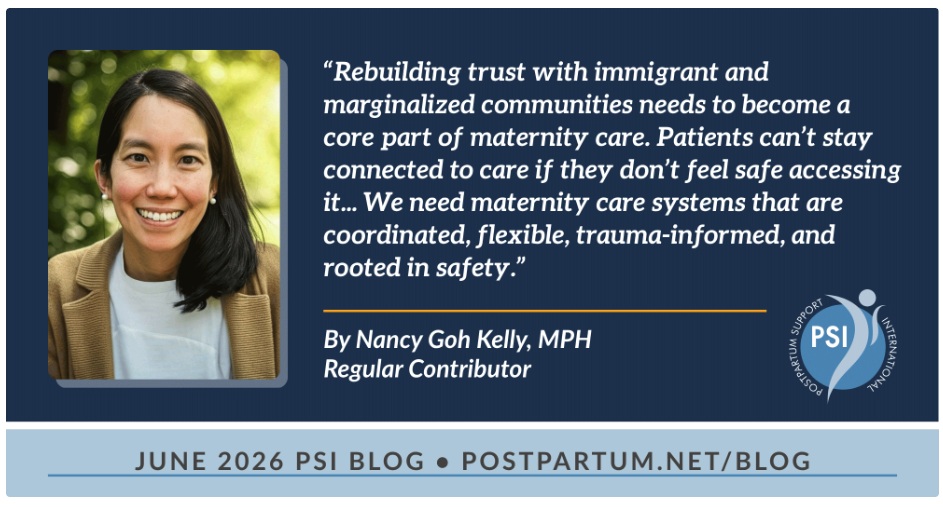
Rebuilding trust with immigrant and marginalized communities needs to become a core part of maternity care. Patients can’t stay connected to care if they don’t feel safe accessing it.
Minnesota’s experience is a wake-up call for perinatal and maternal mental health leaders.
We need maternity care systems that are coordinated, flexible, trauma-informed, and rooted in safety.
That means:
Building coordinated, proactive care systems: OBs, midwives, mental health providers, doulas, interpreters, and community providers working together to identify risk early and keep patients connected to care.
Investing in flexible, community-based infrastructure: Telehealth, home visits, mobile clinics, and flexible scheduling were key to keeping patients engaged.
Recognizing safety-net clinics as essential infrastructure: FQHCs, mobile clinics, doulas and equity-focused providers became lifelines because they were already deeply trusted by their communities.
Making mental health a core part of maternity care: Fear intensifies anxiety, trauma, and mental health symptoms. Patients deserve timely, culturally-responsive, trauma-informed screening and care.
Protecting safe access to care: Healthcare settings should be safe havens where patients can seek care without fear–including protections that keep enforcement activity out of care settings.
Many of the solutions providers created during this surge are things new moms already need every day.
One provider described the response as “a really insanely difficult but passion-driven effort to reach the people who were most afraid.”
We shouldn’t have to wait until the next crisis to build maternity care that reaches moms with the same urgency, compassion, and humanity.
That should be the standard for every new mom.
Because no one should have to choose between safety and care.
If you’re struggling, reach out. You’re not alone. Contact Postpartum Support International’s HelpLine at 1-800-944-4773.