Blog: The Next 6 Books I’d Gift a New Mom
The books that helped me build a healthier, more empowered motherhood | 4 min read Published in Postpartum Support International
I was overjoyed when I discovered this.
A blog I wrote two years ago is a top search result for ‘best books for new moms’.
That meant more people were looking for books that support moms, not just babies.
My first list helped me make sense of early motherhood. This next list is different.
These 6 books helped me build a more empowered motherhood. They taught me to care for myself without guilt, strengthen my marriage, navigate the identity shift, let go of perfectionism, and push back on the systems that make motherhood harder than it has to be.
Book #1: Real Self Care by Pooja Lakshmin
‘Real self-care isn’t selfish. It’s the foundation that allows us to keep showing up for the people we love – including ourselves.’
Who it’s for
For the mom looking for self-care that actually sticks.
Why I recommend it
This is the most practical, evidence-based book I’ve read on preventing burnout before it happens.
How it supports mental health
Moms don’t need another item on their to-do list. Take a bubble bath, get a message, buy a scented candle.
Those things help, but they’re all band-aids for a bigger problem: Burnout.
Dr. Pooja Lakshmin, a psychiatrist, made me rethink self-care as an internal practice, not another product to buy. Her framework focuses on getting clear about your values, setting boundaries (and tolerating the guilt that comes after), practicing self-compassion, and reclaiming your power from systems that weren’t designed to support moms.
This book felt like sitting down with both my therapist and life coach. The process isn’t always comfortable because it asks us to change patterns we’ve lived with for years.
But that’s exactly why it lasts. Real self-care is about designing a life that actually fits my values – and that’s why it stuck.
Book #2: Rest is Resistance by Tricia Hersey
‘You don’t have to earn rest. You are worthy of rest simply because you exist.’
Who it’s for
For the mom who feels guilty the moment she sits down.
Why I recommend it
This book completely changed how I think about rest, productivity, and my self-worth. It reminds us that burnout doesn’t mean we’ve failed. It’s an outcome of the systems that weren’t designed to serve moms.
How it supports mental health
When I was 9 months postpartum, I left my job to spend more time with my baby. My life coach recommended this book when it became clear I had no idea how to ‘rest’.
To be honest, I was more worried people would think I was lazy.
This book helped me realize why rest felt so uncomfortable. For most of my life, I measured my value by how productive I was.
Then Tricia Hersey, rest activist, gave that feeling a name: grind culture.
She explores how capitalism, white supremacy, and patriarchy have shaped our relationship with productivity, making rest feel like a privilege instead of a right.
This book helped me realize that rest is more than taking a nap. Sometimes it’s going for a walk, journaling, putting my phone away, or just taking space to be still.
Early motherhood brings burnout to another level. We’re expected to do it all, never ask for help, bounce back quickly, and enjoy every minute of it.
This book helped me untangle from grind culture. Taking that break from work taught me how to truly rest. It allowed me to be more present for my family and feel more empowered to advocate for a better system for new moms.
Book #3: The Motherload by Sarah Hoover
‘Birth and motherhood did not match up to the narrative I’ve been fed.’
Who it’s for
For the mom who’s done pretending motherhood is magical all the time.
Why I recommend it
This honest memoir normalizes what so many moms are scared to say out loud. The more we talk openly about the realities of motherhood, the less shame moms feel – and the more likely they are to ask for help.
How it supports mental health
Sarah Hoover shares her experience with severe postpartum depression that’s incredibly raw and vulnerable.
Coming from New York’s art and fashion worlds, this memoir reads like a novel.
Sarah expected motherhood to unfold differently than it did. She writes about grieving her former life, feeling disconnected from her baby, intrusive thoughts, and resentment toward her husband. She challenges the narrative that motherhood is always magical and instinctive, reminding us that the transition can be joyful and hard at the same time.
I’ll admit, I judged her at first. She had access to a nanny and resources most moms don’t, and there were choices she made that I wouldn’t have made myself. But as I kept reading, I realized I didn’t have to relate to every part of Sarah’s story to recognize that her pain was valid.
Sarah’s healing journey eventually included therapy, medication, and specialized mental health care – an important reminder that postpartum depression is treatable and that no mom should have to navigate it alone.
Book #4: What About Us by Karen Kleiman
‘I’m tired of feeling like I’m alone in this house.’
Who it’s for
For the mom who loves her partner but can’t stop keeping score.
Why I recommend it
This practical, easy-to-read book reminds couples that early parenthood is about building a new relationship, not getting the old one back.
How it supports mental health
Designed for exhausted parents, this book is easy to read in small doses. It tackles everything from intimacy and scary thoughts to arguments about sleep, communication, and the mental load of parenthood.
After our first baby was born, chores became the biggest source of tension between me and my husband. I was keeping score and wasn’t proud of how controlling I was becoming. Karen Kleiman, Director of the Postpartum Stress Center, fills the book with cartoons and conversation starters that make tough topics feel a little less intimidating.
This book reminded me that our relationship wasn’t failing. We were just exhausted. The book helped me reframe conflict. The problem wasn’t me versus you. It was team us versus sleep deprivation, all the dishes, or whatever parenting struggle we were dealing with that day.
It helped me appreciate the small moments of connection – checking in, sharing gratitude, and repair after conflict. It was about building a new version of our relationship together rooted in teamwork, grace, and empathy.
Book #5: Hunt, Gather, Parent by Michaeleen Doucleff
‘In these traditional cultures, a mother is never isolated. Family and community mean that her emotional and physical needs are met almost automatically.’
Who it’s for
For the mom who feels like she’s doing everything herself.
Why I recommend it
This book challenges the assumption that the Western way of parenting is the only way to parent.
How it supports mental health
After spending time with Maya, Inuit, and Hadzabe families, science journalist Michaeleen Doucleff discovers that many of the parenting pressures we accept in Western culture aren’t universal. Each culture offers ways to lighten a mom’s mental load.
Maya children help with everyday chores from an early age. Inuit parents respond to tantrums with calm and empathy, recognizing that children are still learning. For the Hadzabe, caregiving is shared across family and neighbors, giving moms space to step away and rest.
This book challenged my own expectations of what a ‘good mom’ is. I didn’t have to constantly entertain my children or hold everything together on my own.
The biggest takeaway is that moms were never meant to raise kids alone. This book reminded me that protecting our mental health sometimes means accepting help, letting go of perfectionism, spending more time outside – and trusting our children, our village, and ourselves a little more.
Book #6: Be Brave Little One by Marianne Richmond
‘Be brave to be with your feelings, each one: the happy and sad, the silly and glum.’
Who it’s for
For the mom who needs to offer herself the same grace she shows her own child.
Why I recommend it
I read this book to my daughter when she was a baby. I didn’t expect it to become one of the books I needed most as a mom.
How it supports mental health
Like so many parents, I wanted to raise my daughter to be confident, resilient, and kind. It quickly became one of our favorite bedtime books.
At some point, I realized I wasn’t just reading it to her. So many of these messages were for me, too.
Early motherhood gave me plenty of opportunities to question my choices and feel like I was failing. This book reminded me that growth doesn’t require perfection. It requires self-compassion.
Every page offered a lesson I needed just as much as my daughter:
‘Be brave to mess up before you retry.’ Because motherhood is full of mistakes and second tries.
‘Be brave to be with your feelings, each one.’ Because joy and anxiety, gratitude and overwhelm, confidence and self-doubt can exist at the same time.
‘Be brave to be still when you’ve had enough.’ Because sometimes the bravest thing a mother can do is rest.
As we raise our children, we also have the chance to re-parent ourselves with more grace and self-compassion. The older my daughter gets, the more I realize the lessons I’m teaching her are the ones I need to learn myself.
For the next mom
One of the greatest gifts these books gave me was becoming a healthier, more empowered version of myself. They taught me that caring for my mental health wasn’t selfish, asking for help took courage, and motherhood was never meant to be done alone.
Most importantly, it taught me that I had more agency than I realized to shape the kind of motherhood I wanted.
Looking back, these authors became part of my support village. They gave me relatable perspectives, language, and practical tools to navigate one of the biggest transitions of my life.
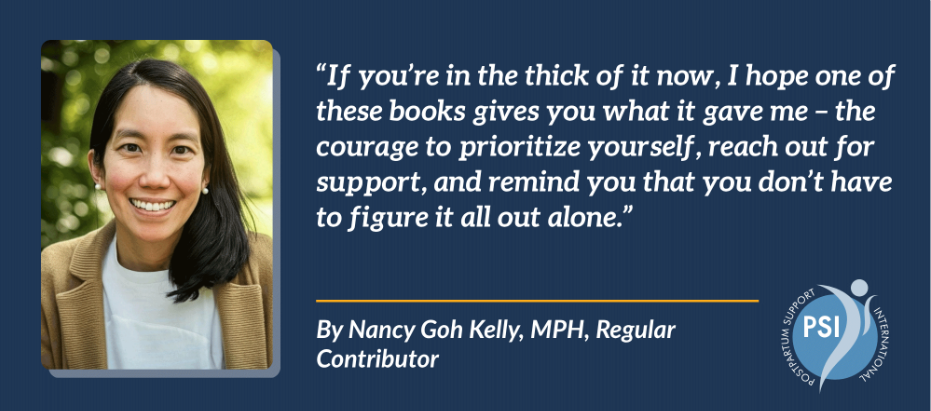
For the next mom: If you’re in the thick of it now, I hope one of these books gives you what it gave me – the courage to prioritize yourself, reach out for support, and remind you that you don’t have to figure it all out alone.
If you’re struggling, reach out. You’re not alone. Contact Postpartum Support International’s HelpLine at 1-800-944-4773.